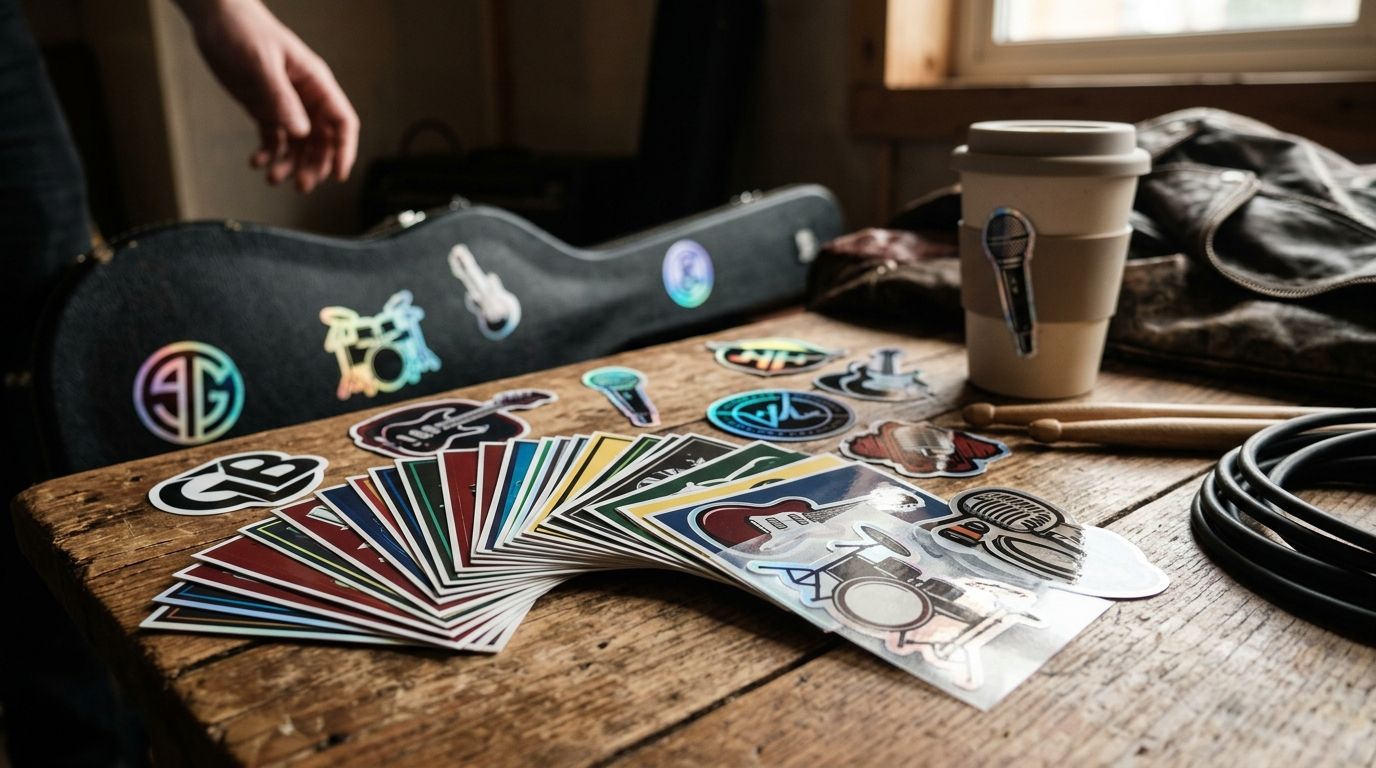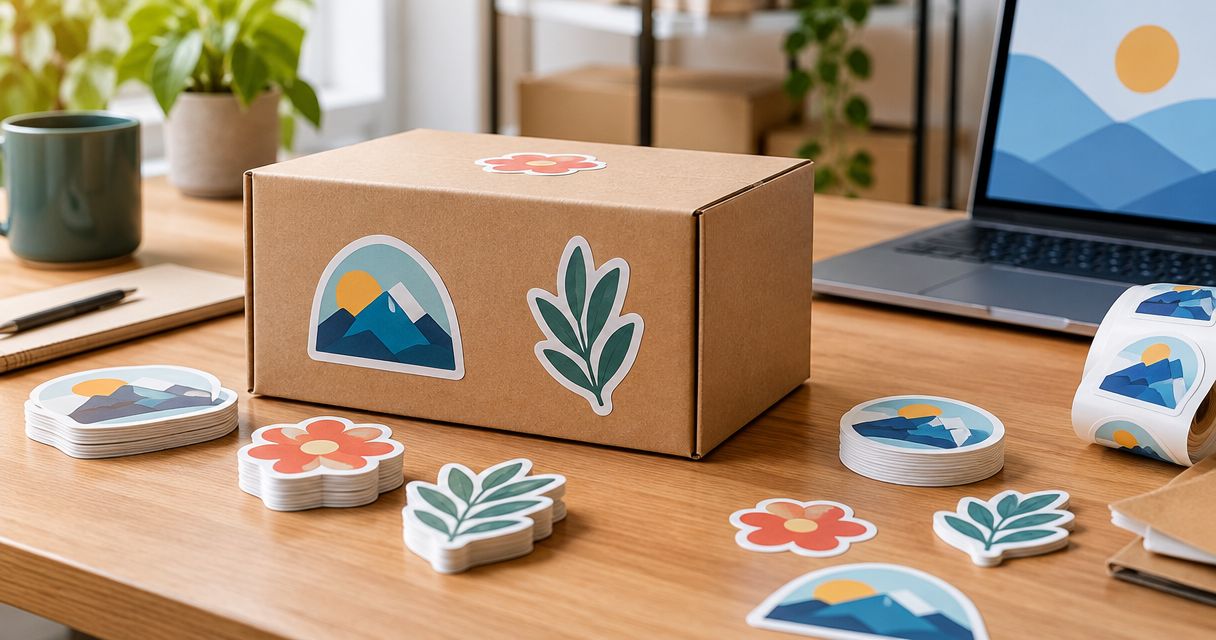
Five sticker types compete for product packaging in 2026, and the right pick depends on where the package lives, not on brand loyalty. Premium Stickers (Outdoor Use) win overall for anything that ships or sits outside a shelf. Sticker Sheets win for multi-SKU product lines. Economy Stickers win on cost for indoor, short-shelf-life items. Kiss Cut and Clear Stickers with White Ink each own a narrower job below.
- Premium die-cut vinyl stickers win for product packaging that ships outdoors or handles moisture.
- Sticker Sheets fit multi-SKU product lines needing several designs printed on one page.
- Economy Stickers cost less per unit but skip the laminate, so keep them indoors only.
- Clear Stickers with White Ink work when the packaging substrate itself needs to show through the art.
- Kiss Cut Stickers speed up hand-application on packaging lines that need fast peel-and-stick.
Why this matters
A sticker on packaging does two jobs: it survives handling, and it reads as the brand at a glance. Get the substrate wrong and the label peels in a warehouse, fades on a truck dock, or looks cheap next to the product. The distinction between kiss-cut vs die-cut stickers matters more for packaging than for laptop decals, because packaging stickers get boxed, stacked, and shipped before anyone opens them.
In 2026, most product packaging runs mix at least two sticker types: one for the shipping exterior, one for the retail-facing label. Picking a single "best" sticker for every use case is how brands end up with a die-cut label peeling off a damp box, or a laminated premium sticker wasted on an indoor-only item.
“If the box gets rained on before it reaches the shelf, skip anything without a laminate overlay.”
What makes the best die-cut stickers for product packaging
- Lamination and vinyl weight — determines whether the sticker survives shipping, handling, and outdoor exposure
- Die-cut precision — how tightly the cut line follows an irregular logo or product silhouette
- Adhesive match to substrate — cardboard, glass, and plastic packaging all grip adhesive differently
- Batch consistency — color and cut accuracy across a multi-SKU print run
- Application speed — how fast a sticker goes from sheet to package on a fulfillment line
- Fit for shelf life — whether the product needs a sticker that survives months versus weeks
Die-cut sticker types for packaging at a glance
| Sticker type | Best for | Standout feature | Key limitation |
|---|---|---|---|
| Premium Stickers (Outdoor Use) | Packaging that ships or sits outdoors | Laminate overlay resists weather and scuffing | Overkill for short-shelf indoor products |
| Kiss Cut Stickers | Fast hand-application on packing lines | Backing sheet peels off in one motion | Backing sheet adds handling step to remove |
| Sticker Sheets | Multi-SKU product lines on one print run | Several designs die-cut on a single page | Not built for single, large product labels |
| Clear Stickers (with White Ink) | Branding on clear or colored packaging | White ink layer lets color show through selectively | Less visual pop on plain white boxes |
| Economy Stickers (Indoor Use) | Short shelf-life, indoor-only products | Lower cost per unit at volume | No laminate, so scratch resistance drops |
1. Premium Stickers: best die-cut stickers for product packaging that ships outdoors
Premium Stickers (Outdoor Use) are printed on American-made vinyl with a laminate overlay, then die-cut to the exact shape of the artwork. That combination is what makes them the default pick when packaging travels by truck, sits in a warehouse without climate control, or ends up outside a customer's door.
Premium Stickers pros:
- Laminate overlay resists scuffing, moisture, and UV fade during transit
- Die-cut edge follows irregular logo shapes instead of a square background
- American-made vinyl holds up through repeated handling
- Works on cardboard, plastic totes, and most rigid packaging surfaces
Premium Stickers cons:
- Heavier vinyl and lamination take longer to apply by hand than a bare-vinyl option
- Not necessary for products that never leave a climate-controlled retail shelf
Best for: product packaging shipped through carriers, stored outdoors, or exposed to moisture before sale. Verdict: Buy.
2. Kiss Cut Stickers: best die-cut stickers for product packaging on fast application lines
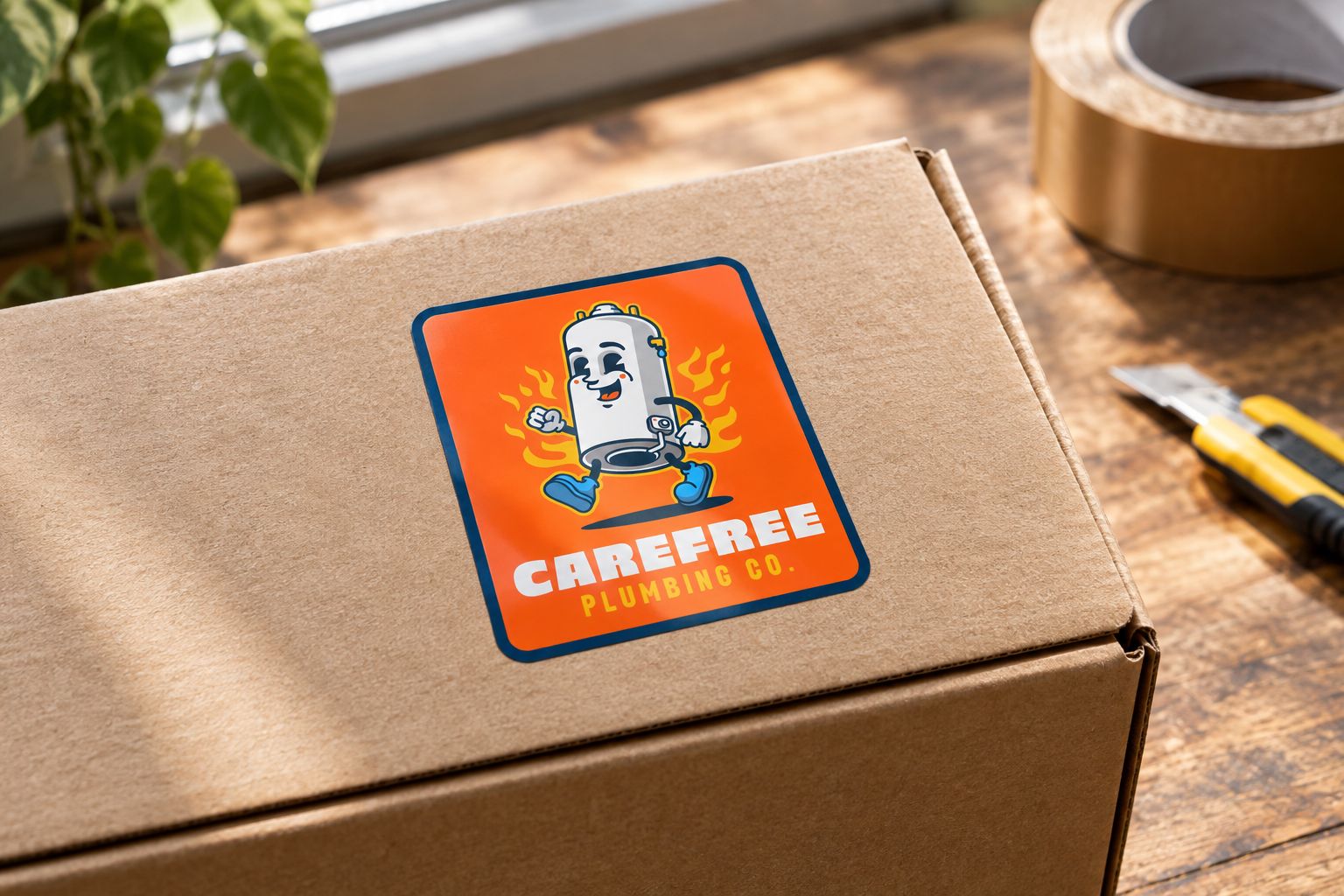
Kiss Cut Stickers are die-cut through the top vinyl layer while a backing sheet stays intact underneath, which is what lets someone peel and stick them in one motion instead of hunting for an edge. On a packaging line where a person applies dozens or hundreds of stickers per shift, that speed difference adds up fast.
Kiss Cut Stickers pros:
- Peel-and-stick backing speeds up manual application
- Same die-cut shape accuracy as fully cut vinyl
- Good for product labels applied by hand rather than by machine
Kiss Cut Stickers cons:
- Backing sheet is an extra piece of waste to manage on the line
- Less ideal than Sticker Sheets when a single package needs several different designs
Best for: packaging teams applying stickers by hand at volume. Verdict: Buy.
3. Sticker Sheets: best die-cut stickers for product packaging with multiple SKUs per run
Sticker Sheets put several die-cut designs on one printed page, which is the practical answer when a product line has multiple variants, flavors, or colorways that each need their own label. Instead of ordering five separate print runs, one sheet order covers the whole line.
Sticker Sheets pros:
- Multiple designs die-cut and printed in a single order
- Simplifies inventory for product lines with several SKUs
- Premium vinyl and permanent adhesive hold up through normal handling
Sticker Sheets cons:
- Not built for a single large label that needs to dominate one package
- Sheet layout means unused designs on the page go to waste if a SKU gets discontinued
Best for: product lines with several variants that each need distinct packaging art. Verdict: Buy.
4. Clear Stickers with White Ink: best die-cut stickers for product packaging on clear or colored materials
Clear Stickers with White Ink print a white layer under the artwork so color shows only where it's meant to, while the rest of the sticker stays transparent. On packaging that's already glass, frosted plastic, or a colored box, that transparency lets the substrate itself become part of the design instead of getting covered by a white sticker background.
Clear Stickers pros:
- Background shows through where the design calls for it
- Looks cleaner on glass jars, tinted bottles, and colored packaging than an opaque label
- White ink layer keeps colors accurate even on dark substrates
Clear Stickers cons:
- Loses its main advantage on plain white or cardboard packaging
- Complex color separations take more file prep than a standard opaque design
Best for: packaging on glass, tinted plastic, or colored stock where transparency is part of the design. Verdict: Buy for the right substrate, skip for plain cardboard.
5. Economy Stickers: best budget die-cut stickers for product packaging with short shelf life
Economy Stickers use the same American-made vinyl as the premium line but skip the laminate overlay, which is the trade-off that makes them the lower-cost option per unit at volume. Without lamination they're still scratch-resistant enough for normal indoor handling, but they're not the pick for anything that sees rain, sun, or a warehouse dock.
Economy Stickers pros:
- Lower cost per unit than laminated options at volume
- Still holds up to normal indoor handling and shelf display
- Good fit for limited-run or seasonal packaging that won't sit in inventory long
Economy Stickers cons:
- No laminate means less scratch and moisture resistance than Premium Stickers
- Not a fit for products that ship outdoors or sit in storage for months
Best for: indoor products with a short shelf life or limited print runs. Verdict: Buy for indoor-only, short-run packaging.


How this ranking was built
Each sticker type was measured against the six criteria above: lamination, die-cut precision, adhesive match, batch consistency, application speed, and fit for shelf life. Premium Stickers rank first because they clear every criterion for the widest range of packaging conditions in 2026, not because they're the newest option. Sticker Sheets, Clear Stickers, and Economy Stickers each rank highest on the one or two criteria that matter most for their specific use case.
Which die-cut stickers should you choose?
For packaging that ships, sits outdoors, or handles moisture before a customer sees it, Premium Stickers (Outdoor Use) is the default in 2026. If the product line runs several SKUs on one packaging design, order Sticker Sheets instead of separate runs. Indoor-only products with a short shelf life can drop to Economy Stickers and keep the budget for something else. Check the cost breakdown for custom stickers before committing to a full print run, since substrate and finish both move the per-unit math.
FAQ
What's the best die cut sticker for product packaging in 2026?
Premium Stickers (Outdoor Use) are the best overall pick for product packaging in 2026 because the laminate overlay resists moisture, scuffing, and UV fade during shipping. Indoor-only products with a short shelf life can use Economy Stickers instead.
Are die-cut stickers better than kiss-cut for packaging?
Die-cut stickers cut through the full vinyl and backing, which suits standalone product labels, while kiss-cut stickers leave the backing intact for faster peel-and-stick application. Packaging lines applying labels by hand often prefer kiss-cut for speed.
Do die-cut stickers work on curved or glass packaging?
Yes, die-cut vinyl stickers apply to curved glass and plastic packaging as long as the adhesive matches the substrate. Clear Stickers with White Ink are a common choice on glass because the transparent base lets the container show through.
How many designs can go on one sticker sheet?
Sticker Sheets fit multiple die-cut designs on a single printed page, which works well for product lines with several flavors, colors, or SKU variants. The exact layout depends on the size of each individual design.
Are economy stickers durable enough for product packaging?
Economy Stickers use the same American-made vinyl as the premium line but skip the laminate overlay, so they hold up to normal indoor handling but not moisture or extended outdoor exposure. They fit short-run or seasonal packaging best.
Do clear stickers show up well on white cardboard packaging?
Clear Stickers with White Ink lose most of their advantage on plain white cardboard since there's no background color for the transparency to interact with. They perform better on glass, tinted plastic, or colored packaging stock.
What vinyl material do custom die-cut stickers use in 2026?
Sticker-A-Peel prints die-cut stickers on American-made vinyl with eco-friendly inks, with a laminate overlay on the Premium line for added durability. The Economy line uses the same vinyl without the laminate step.
One last thing
Most packaging failures aren't a print quality problem, they're a mismatch problem: a laminated Premium sticker wasted on a product that never leaves a climate-controlled shelf, or an Economy sticker peeling off a box that sat on a truck for three days. Match the sticker to where the package actually goes before matching it to how the design looks on screen.