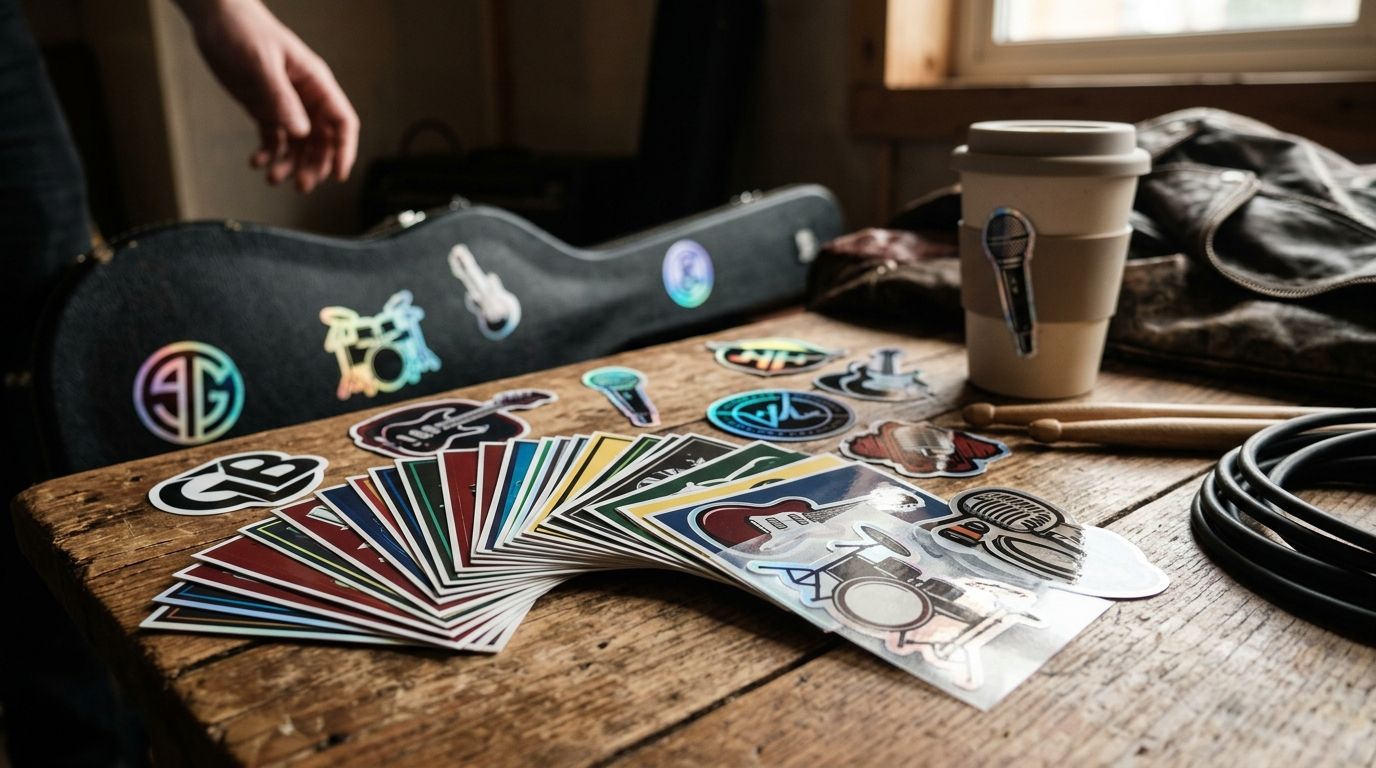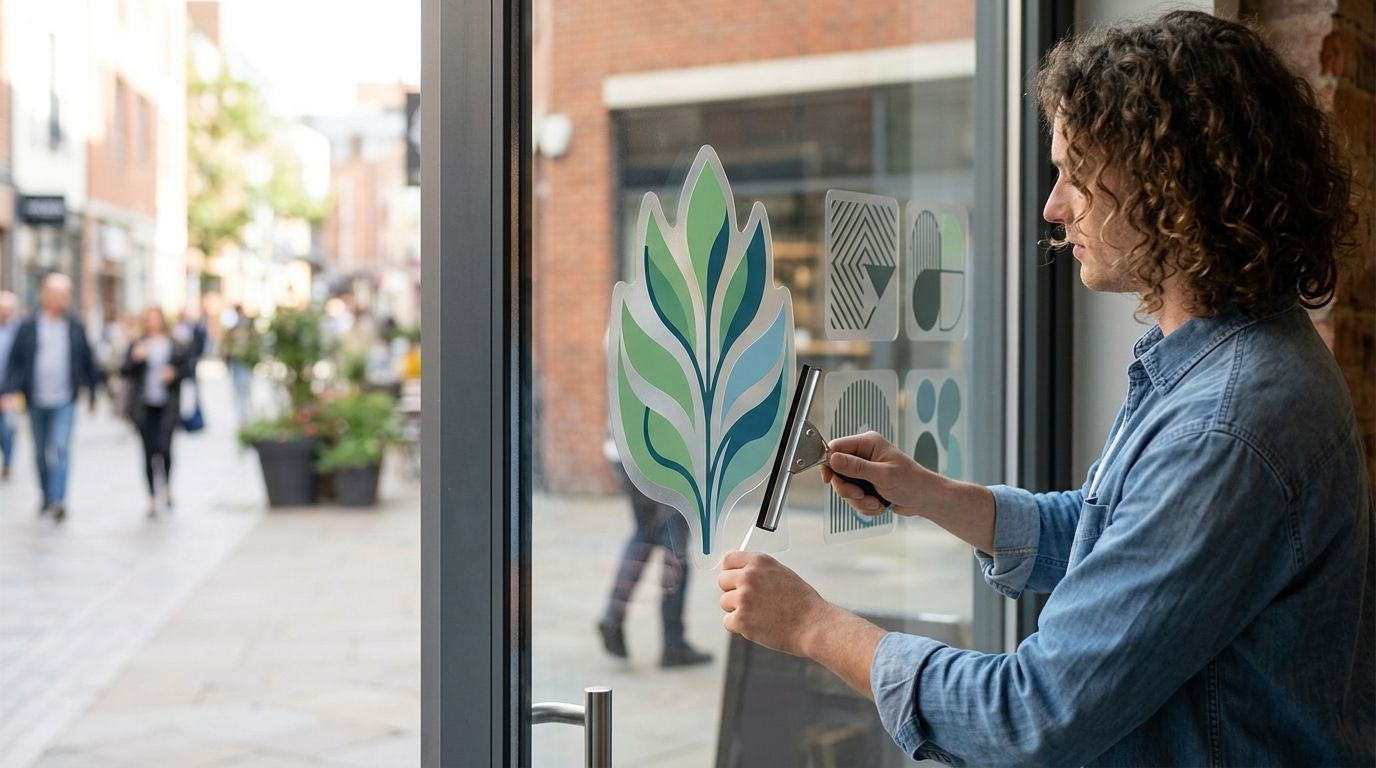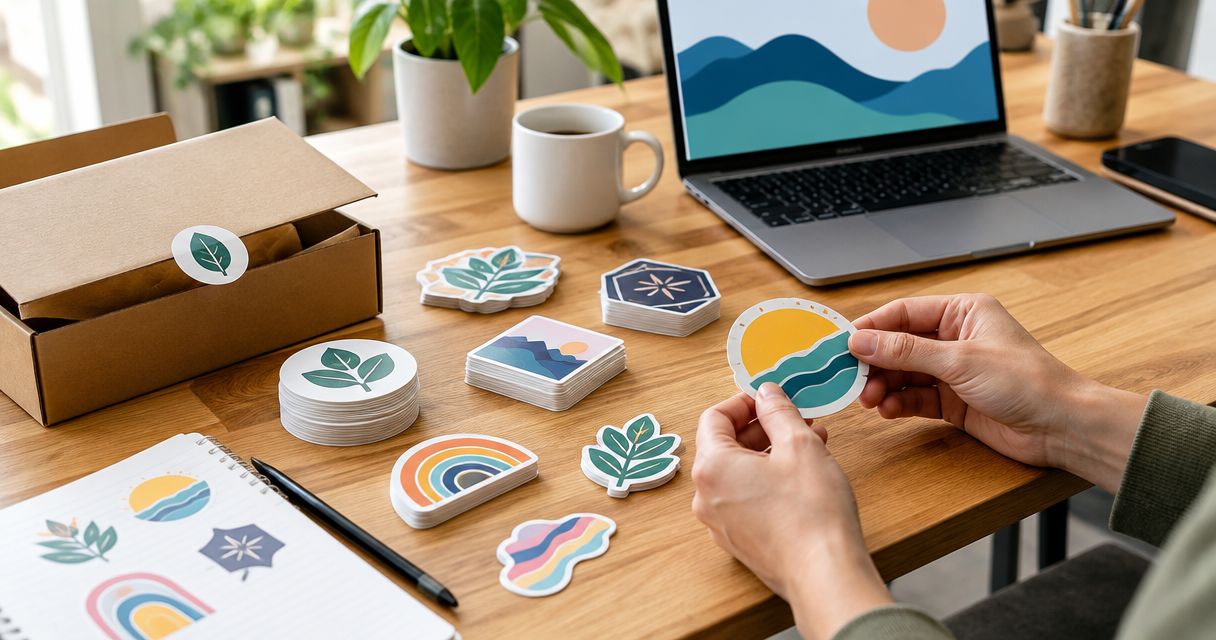
Picking the right sticker type shapes how professional your packaging, storefront, or giveaway looks — the wrong material peels, fades, or looks cheap within weeks.
- Kiss Cut Stickers win overall for custom stickers for small business branding — easy peel, sharp edges, low cost per unit.
- Premium Stickers (die-cut, outdoor-rated) are the pick for storefronts, vehicles, and anything exposed to weather in 2026.
- Clear Stickers with White Ink solve branding on tinted packaging, tumblers, and glass where a solid-color sticker looks wrong.
- Sticker Sheets fit multi-design branding kits and trade show giveaways better than single-design runs.
- Economy Stickers are the budget option for indoor-only labels where lamination isn't worth paying for.
Why this matters
A small business ordering its first run of branded stickers usually picks based on price alone, then finds out in 2026 that an indoor-rated sticker on a delivery box fades in a week, or a solid-color sticker looks flat on a clear tumbler. The material and finish matter as much as the artwork.
Each custom vinyl sticker type solves a different problem: shelf life outdoors, adhesive strength on curved surfaces, or how the background reads on clear packaging. Matching the type to the use case is the actual decision — not just picking the cheapest option per sheet.
Best overall: Kiss Cut Stickers. Best for outdoor branding: Premium Stickers (die-cut). Best budget option: Economy Stickers (indoor use).
What makes the best custom stickers for small business branding
- Weather resistance — laminate overlay and UV-stable vinyl matter for anything that leaves the store or office
- Adhesive strength — permanent adhesive that holds on curved bottles, laptops, and cardboard without lifting
- Print precision — clean die-cut or kiss-cut edges around logos and irregular shapes
- Background handling — clear vinyl vs. solid backing changes how a logo reads on tinted or transparent surfaces
- Cost per unit at volume — economy runs make sense for indoor-only labels, not for anything customer-facing outdoors
- Material sourcing — American-made vinyl and eco-friendly inks matter for brands that market sustainability
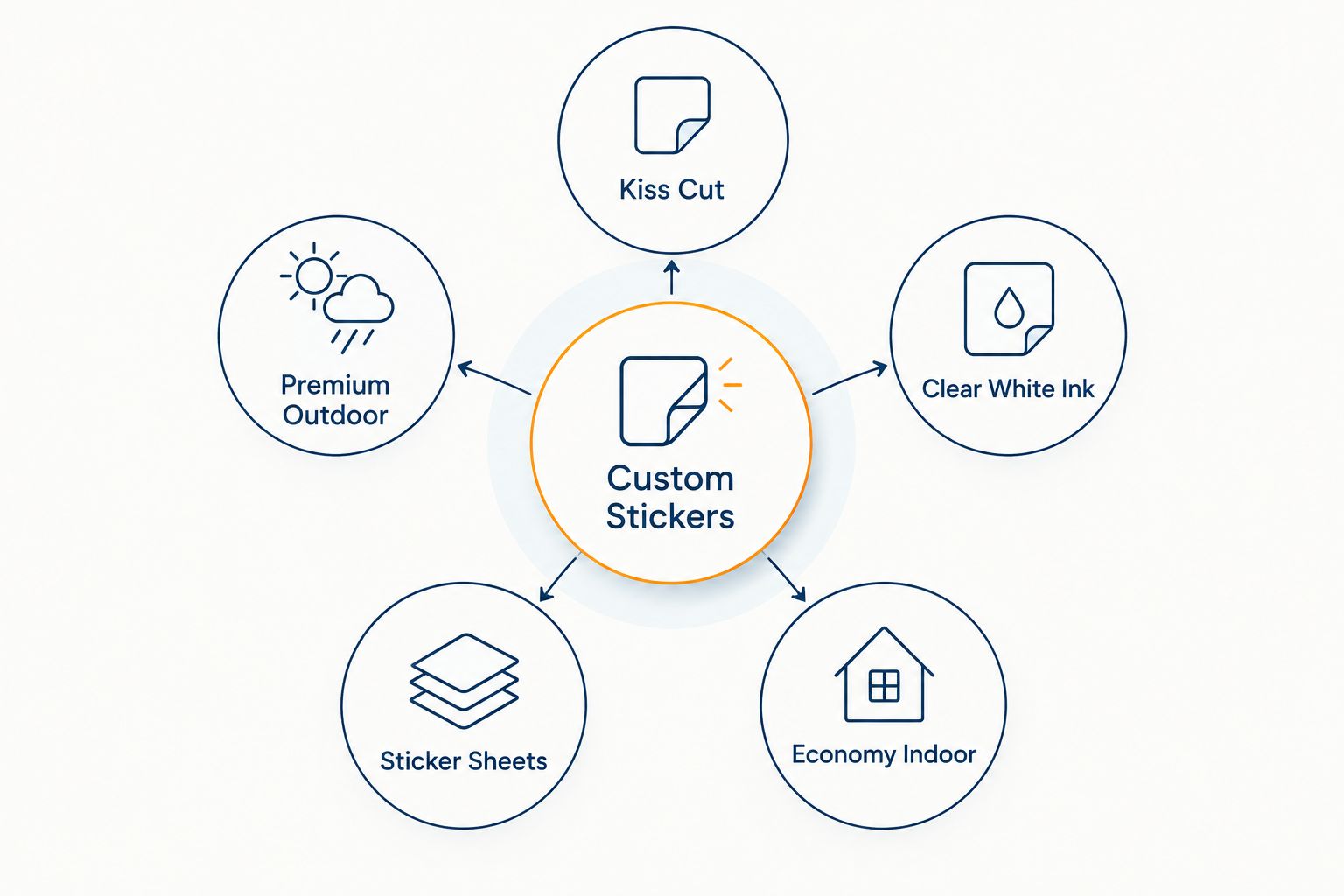
At a glance
| Sticker type | Best for | Standout feature | Key limitation |
|---|---|---|---|
| Kiss Cut Stickers | General product branding, peel-and-stick packaging | Easy peel backing, sharp edge cuts | Adhesive backing peels if applied to very rough surfaces |
| Premium Stickers (die-cut) | Outdoor signage, vehicle decals, storefronts | Weather-resistant laminate overlay | Costs more per unit than economy or kiss-cut runs |
| Clear Stickers (with White Ink) | Branding on tinted packaging, tumblers, glass | Clear vinyl lets background show through | Fine detail can look muddy on very dark surfaces without enough white ink |
| Sticker Sheets | Multi-design branding kits, trade show giveaways | Several designs printed on one page | Not built for single large-format branding needs |
| Economy Stickers (indoor use) | Budget indoor product labels | Lowest cost per sticker | No laminate overlay — scratches and fades faster than premium options |
1. Kiss Cut Stickers: best custom stickers for peel-and-stick product branding
Kiss Cut Stickers cut through the vinyl layer but leave the backing sheet intact, so each sticker peels off individually without a separate die-cut pass. That makes them the fastest option to apply to product packaging, laptops, or water bottles at scale.
The finish holds sharp edges around logos and text, which is the detail that makes a sticker look printed rather than stamped. For a small business shipping product with a logo sticker on every box, this is the workhorse option.
Kiss Cut Stickers pros:
- Individual peel-and-stick backing speeds up application
- Clean edge cuts around complex logo shapes
- Works on flat and lightly curved surfaces
Kiss Cut Stickers cons:
- Adhesive backing can lift on very rough or textured surfaces
- Not rated for long-term outdoor exposure the way premium die-cut is
Best for: everyday product branding and packaging. Verdict: Buy.
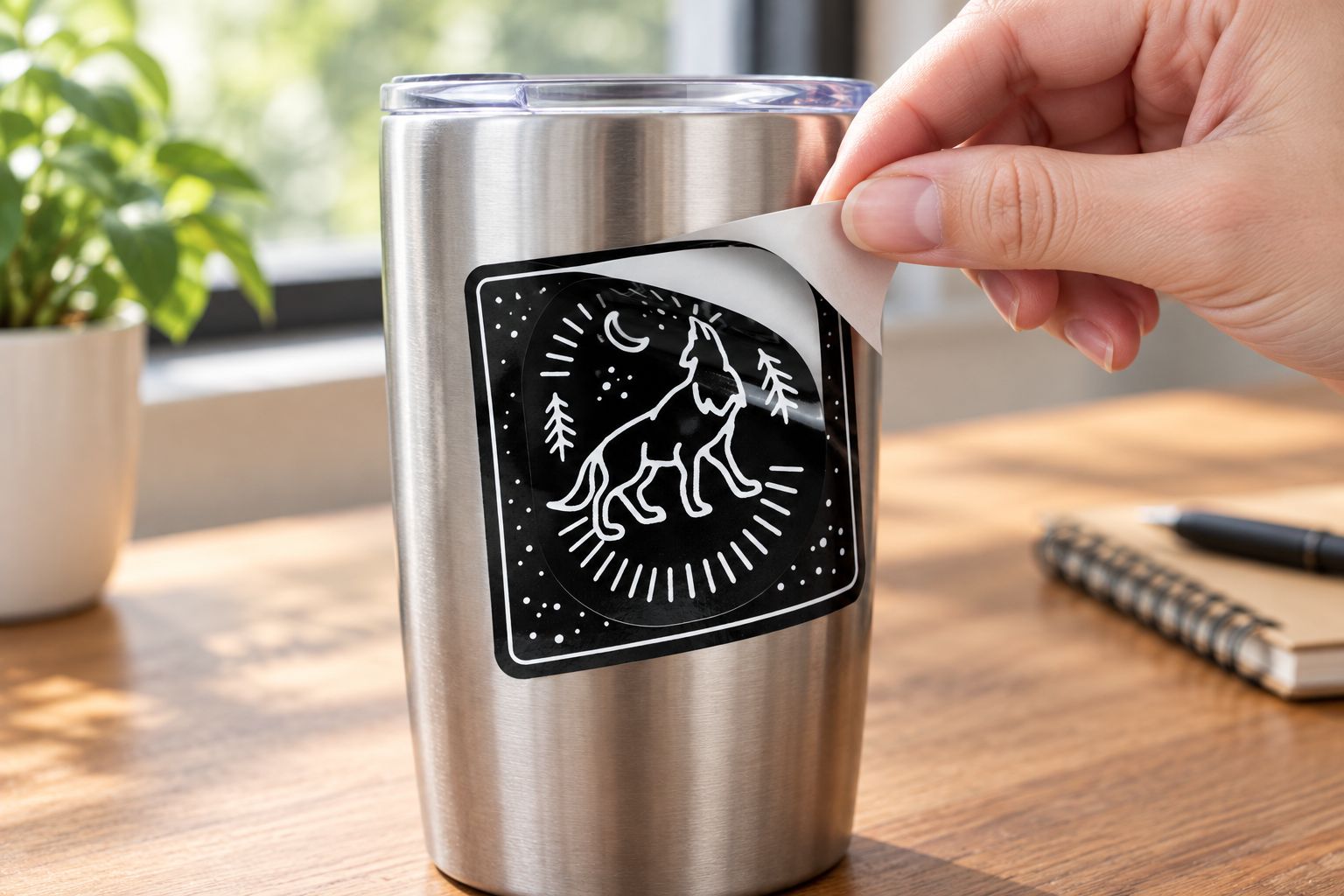
2. Premium Stickers (die-cut): best custom stickers for outdoor and vehicle branding
Premium Stickers are die-cut vinyl with a laminate overlay built for long-term outdoor exposure — think storefront windows, vehicle decals, or equipment labels left in the sun. The lamination is what separates this from every other option on the list when UV and weather are a factor in 2026.
A small business that hands out stickers meant for laptops or bumpers should default here over economy or kiss-cut, since neither of those carries the same protective layer.
Premium Stickers pros:
- Laminate overlay resists fading and scratching outdoors
- Die-cut precision holds detailed logo shapes
- Built for long-term exposure, not just short display use
Premium Stickers cons:
- Priced higher per unit than kiss-cut or economy options
- Overkill for indoor-only branding where lamination adds no value
Best for: outdoor signage, vehicles, and equipment labeling. Verdict: Buy.
3. Clear Stickers (with White Ink): best custom stickers for branding on clear packaging
Clear Stickers with White Ink print the design with a white underlay so color shows correctly, while the surrounding vinyl stays transparent. That combination is what makes a logo sit cleanly on a tinted bottle, a glass jar, or a tumbler instead of looking like a solid block of color pasted on top.
This is a narrower use case than kiss-cut or premium stickers — it solves one specific problem (branding on see-through or tinted surfaces) rather than general product labeling.
Clear Stickers pros:
- Transparent background blends into tinted or glass surfaces
- White ink layer keeps colors accurate on dark backgrounds
- Reads as more premium than a solid-color label on clear packaging
Clear Stickers cons:
- Fine detail can look soft without enough white ink coverage
- Not the right pick for opaque cardboard or matte surfaces where a solid backing works fine
Best for: tumblers, glass jars, and tinted product packaging. Verdict: Buy for clear-surface branding, skip for cardboard.
4. Sticker Sheets: best custom stickers for multi-design branding kits
Sticker Sheets put several designs — logo variations, taglines, mascots — on a single die-cut page instead of one design per sticker. That format fits welcome kits, trade show giveaways, or subscription box inserts where the goal is variety, not a single repeated logo.
A small business handing out one branded sticker at checkout doesn't need this format; it's built for when the goal is a small collection, not a single mark.
Sticker Sheets pros:
- Multiple designs printed and shipped as one item
- Premium vinyl and permanent adhesive on every design in the sheet
- Efficient for giveaway kits and welcome packages
Sticker Sheets cons:
- Not built for a single large-format branding need
- Per-design cost runs higher than ordering one design at volume
Best for: giveaway kits and multi-design promo packs. Verdict: Buy for kits, skip for single-logo runs.
5. Economy Stickers (indoor use): best budget custom stickers for indoor labels
Economy Stickers use the same premium vinyl as the rest of the lineup but skip the protective laminate overlay, which is what keeps the cost down. They still hold up to normal handling and scratching indoors — they just aren't built for sun or weather exposure.
For a small business labeling products that stay on a shelf or in a drawer, paying for lamination is money spent on protection the sticker never needs.
Economy Stickers pros:
- Lowest cost per sticker in the lineup
- Same premium vinyl base as laminated options
- Fine for indoor product labels and packaging inserts
Economy Stickers cons:
- No laminate overlay, so it fades and scratches faster outdoors
- Not the right pick for anything customers will handle repeatedly outdoors
Best for: indoor-only product labels on a budget. Verdict: Buy for indoor use, skip for outdoor or high-handling items.


How we ranked these
Ranking rests on the six criteria above — weather resistance, adhesive strength, print precision, background handling, cost per unit, and material sourcing. Kiss Cut Stickers rank highest overall because they cover the widest range of everyday branding needs without a laminate premium. Premium Stickers rank highest specifically for outdoor durability, not general use. If pricing detail matters before you order, the sticker pricing guide breaks down what changes cost per unit at different volumes.
Which custom sticker should you choose?
If you're branding a product that ships in boxes or gets handled indoors, Kiss Cut Stickers are the default pick for custom stickers for small business branding in 2026. If the sticker lives outside — a vehicle, a storefront window, outdoor signage — move to Premium Stickers regardless of the extra cost per unit; lamination is the difference between a sticker that lasts a season and one that lasts years. Clear Stickers with White Ink solve one narrow problem well: branding on tinted or glass packaging. Sticker Sheets exist for multi-design kits, not single-logo runs. Economy Stickers are the right budget call only when the sticker never leaves an indoor shelf. For a side-by-side breakdown of edge quality between the two die-cut styles, the kiss-cut vs. die-cut comparison covers the cutting difference in more depth.
FAQ
What are the best custom stickers for small business branding in 2026?
Kiss Cut Stickers work best for general product branding in 2026 because of the peel-and-stick backing and sharp edge cuts. Premium die-cut stickers take over when the sticker will face outdoor weather.
Are kiss cut stickers better than die cut for branding?
Kiss cut stickers are easier to peel and apply individually, while die-cut stickers cut all the way through both layers for a cleaner standalone edge. Kiss-cut suits high-volume product labeling; die-cut suits outdoor and vehicle branding.
Can custom stickers be used outdoors?
Yes, but only laminated options like Premium Stickers hold up to UV and weather long-term. Economy Stickers skip the laminate overlay and fade faster outdoors.
What sticker type works best on clear packaging?
Clear Stickers with White Ink are built for this — the white ink layer keeps the design visible while the surrounding vinyl stays transparent on tinted or glass surfaces.
Are economy stickers durable enough for product labels?
Economy Stickers use the same premium vinyl base as laminated options and hold up fine for indoor product labels. They lack the laminate overlay, so they aren't rated for outdoor or high-handling use.
How many sticker types should a small business order?
Most small businesses only need one primary type for packaging plus one outdoor-rated type if signage or vehicles are involved. Sticker sheets get added separately for giveaway kits.
Do custom stickers need lamination for outdoor use?
Yes. Lamination is what protects the print from UV fading and scratching outdoors; without it, colors fade within weeks of sun exposure.
What's the difference between sticker sheets and single stickers?
Sticker sheets print multiple designs on one page, built for variety in a kit or giveaway. Single stickers are one design produced at volume for consistent product branding.
One last thing
The detail most small businesses skip: matching white ink coverage to the artwork before ordering clear stickers, not after. A logo with thin lines or small text needs more white ink underneath to stay legible on a clear or tinted surface — send a proof request before running a full batch of Clear Stickers with White Ink in 2026, since a design that reads fine on white paper can go muddy on tinted plastic.